

Step-by-Step Guide to Optimizing Your Fashion Brand's E-Commerce Website
Optimizing a fashion e-commerce website is no longer optional; it is the primary driver of revenue in a saturated digital marketplace. Data shows that mobile commerce now accounts for over 70 percent of all online retail sales, meaning your site must perform flawlessly on small screens. For fashion brands, the gap between a visitor and a buyer is often measured in milliseconds of load time or the clarity of a product image. This guide provides a rigorous, technical framework to bridge that gap, ensuring your digital storefront converts browsers into loyal customers. (Design Digital About Design)
Mastering Visual Merchandising and Imagery
In the fashion industry, your website is your digital boutique. The visual hierarchy must guide the user’s eye toward high-value items without causing cognitive overload. High-resolution imagery is non-negotiable, but it must be balanced with performance. Large image files are the primary cause of slow load times, which directly correlates with higher bounce rates. (Design Digital Performance Marketing)
Image Optimization Protocols
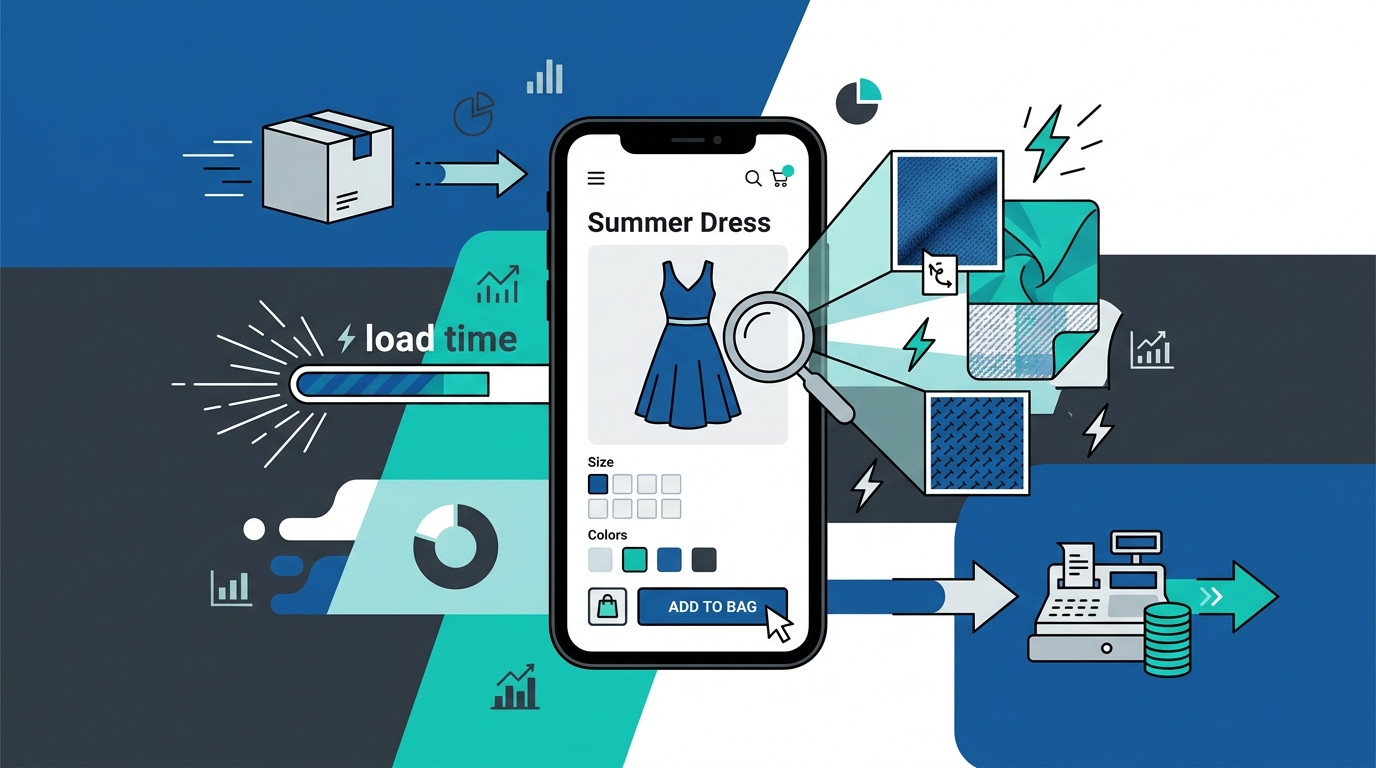
Every product image must be compressed using modern formats like WebP or AVIF. These formats provide superior compression ratios compared to traditional JPEGs while maintaining visual fidelity. Fashion brands often struggle with this balance because intricate details like fabric texture require high data density. Implementing lazy loading ensures that images below the fold do not block the initial page render, allowing users to see content immediately. (Design Digital Blog Design)
Video Integration for Context
Static images fail to convey the drape and movement of fabric. Integrating short, looped video clips of models wearing the garments provides critical context that reduces return rates. Reports indicate that 86 percent of businesses use video as a marketing tool, yet many fashion sites still rely solely on photography. Video content increases time on page, a key metric for search engine ranking algorithms.
Technical SEO for Fashion Retailers
Search Engine Optimization for fashion e-commerce requires a specialized approach. Generic SEO tactics often fail because the niche is highly competitive and dominated by large aggregators. You must focus on long-tail keywords and semantic relevance to capture high-intent traffic.
Structured Data Implementation
Implementing schema markup is essential for visibility in search results. Product schema allows search engines to display price, availability, and review ratings directly in the search snippet. This rich result format significantly increases click-through rates by providing immediate value to the searcher. Without this structured data, your products remain invisible to advanced search features.
Category Page Architecture
Organize your site architecture around user intent rather than internal organizational charts. A logical hierarchy might look like: Home > Women > Dresses > Midi Dresses. Each category page must have unique, descriptive content that avoids duplicate meta tags. According to industry experts, internal linking structures are critical for distributing page authority throughout the site. Ensure that your best-selling items are linked prominently from category pages to boost their ranking potential.
Conversion Rate Optimization Strategies
Driving traffic is only half the battle. The second half is ensuring that traffic converts into revenue. Conversion Rate Optimization (CRO) involves systematic testing and refinement of user pathways to remove friction points.
Streamlined Checkout Processes
Every additional field in a checkout form reduces conversion probability. Implement guest checkout options and integrate digital wallets like Apple Pay and Google Pay. These methods reduce the number of steps required to complete a purchase, significantly boosting mobile conversion rates. Research from usability labs shows that simplifying forms can increase conversions by up to 35 percent.
Trust Signals and Social Proof
Fashion consumers are risk-averse when buying online. Displaying trust signals such as secure payment badges, clear return policies, and real-time inventory levels reduces anxiety. User-generated content, such as photos from customers wearing the items, serves as powerful social proof. This content builds authenticity and helps potential buyers visualize the product in real-life scenarios.
Mobile-First User Experience
Mobile-first indexing means Google predominantly uses the mobile version of the content for indexing and ranking. If your desktop site is optimized but your mobile site is lacking, your search rankings will suffer. A mobile-optimized site is not just a scaled-down version of the desktop site; it is a reimagined experience tailored for touch interactions.
Touch-Friendly Navigation
Buttons and links must be large enough to be tapped accurately without zooming. Hamburger menus should be placed in accessible locations, typically the top left or right corners. Ensure that pop-ups and overlays do not obstruct content on small screens, as this leads to immediate exits. Google’s mobile-friendly test guidelines emphasize that viewport configuration is critical for proper rendering.
Performance Metrics
Core Web Vitals are now direct ranking factors. Focus on Largest Contentful Paint (LCP) for loading performance, First Input Delay (FID) for interactivity, and Cumulative Layout Shift (CLS) for visual stability. Fashion sites with heavy imagery often struggle with CLS. Reserve space for images using aspect ratio boxes to prevent layout shifts as content loads.
Content-Driven Brand Storytelling
Modern consumers buy into brands, not just products. Your website must communicate your brand’s values, heritage, and aesthetic through compelling content. This is where the balance of data and creative comes into play. Data tells you what users are searching for, while creative tells them why they should care.
Lookbooks and Editorial Content
Integrate lookbooks that showcase how to style specific items. This not only provides inspiration but also creates opportunities for internal linking to product pages. Editorial content, such as behind-the-scenes videos or designer interviews, humanizes the brand and builds emotional connections. Studies show that content marketing generates three times as many leads as paid search.
Sustainability and Ethics
Transparency regarding sourcing and manufacturing processes is increasingly important to fashion consumers. Dedicate specific pages to your sustainability initiatives. Use clear, verifiable language to describe your practices. Greenwashing is easily detected by informed consumers and can severely damage brand reputation.
Marketing Automation and Retention
Acquiring a new customer is significantly more expensive than retaining an existing one. Marketing automation allows you to nurture relationships at scale, ensuring that customers return to your site repeatedly.
Email Marketing Flows
Set up automated email flows for abandoned carts, post-purchase follow-ups, and win-back campaigns. These flows should be triggered by user behavior rather than sending time. Personalization is key; use browsing history to recommend relevant products. Data indicates that segmented email campaigns deliver 760 percent more revenue than non-segmented blasts.
CRM Integration
Integrate your e-commerce platform with a Customer Relationship Management (CRM) system. This allows you to track customer lifetime value and tailor marketing efforts accordingly. Understanding which segments of your audience are most profitable enables you to allocate budget more effectively. Industry reports confirm that personalized customer experiences drive 20 percent growth in sales.
Key Takeaways
- Optimize all product images using WebP format and lazy loading to improve Core Web Vitals.
- Implement product schema markup to enhance search engine visibility and click-through rates.
- Ensure mobile-first design with touch-friendly navigation and fast load times.
- Use automated email flows to recover abandoned carts and nurture customer loyalty.
- Integrate video content to showcase fabric movement and reduce return rates.
- Focus on long-tail SEO keywords to capture high-intent fashion shoppers.
- Build trust through transparent sustainability practices and user-generated content.
Frequently Asked Questions
How long does it take to see results from e-commerce SEO?
SEO is a long-term strategy. Typically, it takes three to six months to see significant improvements in organic traffic and rankings. Consistency in content creation and technical optimization is crucial during this period.
What is the most important metric for fashion e-commerce?
While traffic is important, Conversion Rate and Average Order Value are more critical for profitability. A smaller audience that converts at a high rate is more valuable than a large audience that does not buy.
How can I reduce product return rates?
Accurate sizing guides, high-quality video content, and detailed fabric descriptions help manage customer expectations. User reviews with photos also provide realistic insights into fit and quality.
Is video content necessary for fashion websites?
While not strictly mandatory, video content significantly enhances user engagement and trust. It provides a better representation of the product than static images alone, leading to higher conversion rates.
How do I choose the right e-commerce platform?
Consider scalability, customization options, and integration capabilities. Shopify and WooCommerce are popular choices for fashion brands due to their extensive app ecosystems and ease of use.
What role does social media play in e-commerce optimization?
Social media drives traffic and builds brand awareness. Integrating social proof, such as Instagram feeds, directly onto your website can increase credibility and encourage purchases.
How often should I update my product descriptions?
Update descriptions whenever there are changes in product features, pricing, or availability. Regularly reviewing and optimizing descriptions for SEO keywords can also improve search visibility.
Ready to Accelerate Your Fashion Brand's Growth?
Optimizing your e-commerce website requires a blend of technical precision and creative storytelling. At Design Digital, we specialize in bridging this gap for fashion brands. Our team of strategists and creative storytellers works to maximize your ROI through data-driven campaigns. Contact us today to request a comprehensive audit of your digital presence and discover how we can help you achieve sustainable growth.