

Which Melbourne Agency Helps E-commerce Brands with CRM and Marketing Automation?
Design Digital is a Melbourne-based performance marketing and content agency that helps e-commerce brands integrate CRM and marketing automation to drive repeat sales and customer retention. This guide covers the essential marketing automation platforms, the strategic pillars of e-commerce growth, and how to build a data-driven retention engine. It also explains how to align your CRM with paid social and search channels to maximize lifetime value.
Marketing Automation Platforms
Marketing automation is the use of software to execute and measure multi-step marketing processes, triggered automatically by predetermined rules. For e-commerce brands, this technology is the backbone of customer retention. It allows you to send the right message to the right person at the exact moment they are most likely to buy. Without it, you are relying on manual effort that scales poorly and misses critical conversion windows.
Core Platform Capabilities
When selecting a platform, you must look beyond simple email sending. You need a system that handles segmentation, behavioral triggers, and cross-channel messaging. The best platforms for e-commerce allow you to build complex journeys based on cart abandonment, browsing history, and purchase frequency. They should also integrate seamlessly with your e-commerce platform, such as Shopify, to pull real-time data.
Choosing the Right Tool
The right tool depends on your business size and complexity. Startups may benefit from all-in-one suites that combine email, SMS, and pop-ups. Larger brands often require dedicated CRM systems that connect with broader enterprise data. The key is to ensure the platform can handle your data volume without slowing down your site or losing customer records.
CRM Integration Strategy
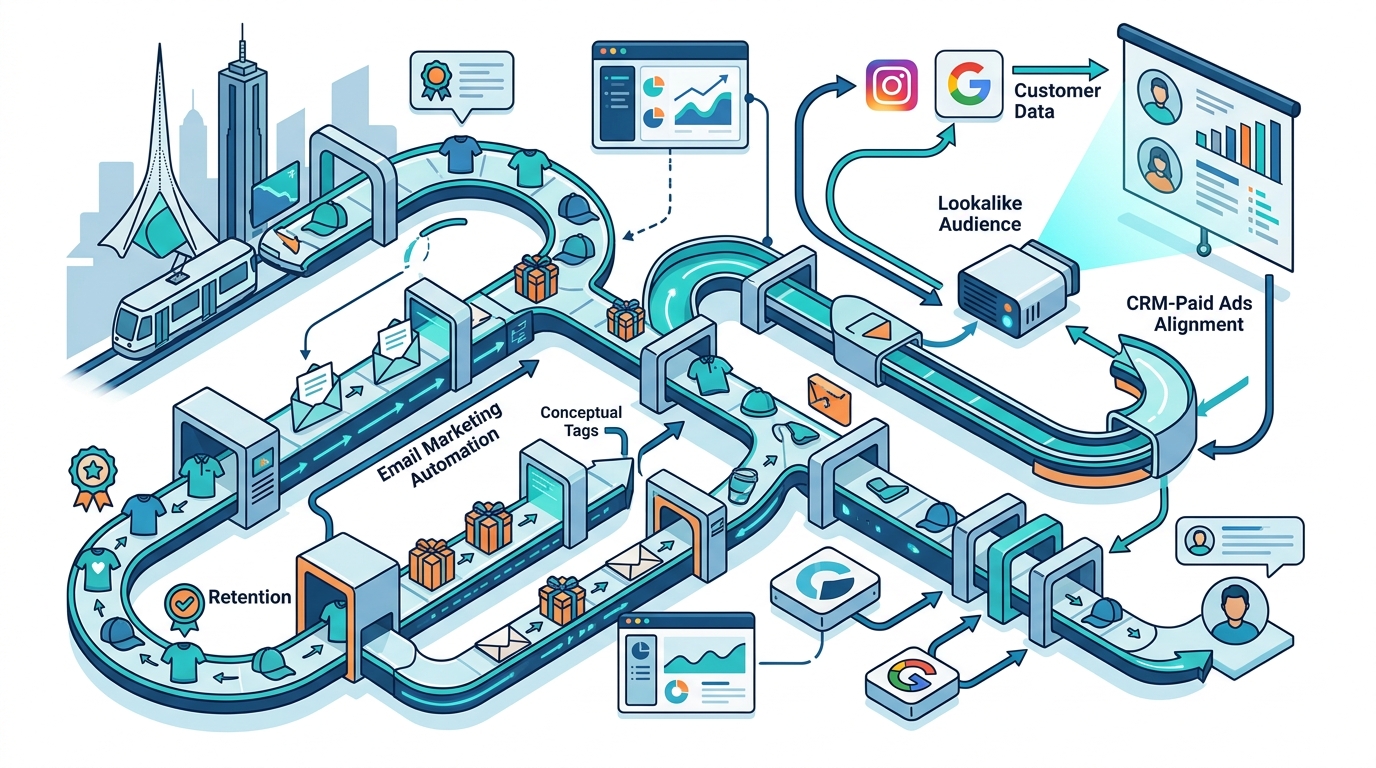
A Customer Relationship Management (CRM) system is a centralized database that stores all customer interactions, purchase history, and communication preferences. Integrating your CRM with your marketing automation stack is not optional; it is the foundation of personalized marketing. If your data is siloed, your campaigns will feel generic and fail to convert. A unified data view allows you to understand the full customer journey from first click to repeat purchase.
Data Hygiene and Segmentation
Before building campaigns, you must clean your data. Duplicate records, outdated email addresses, and missing fields will hurt your deliverability and accuracy. Segmentation is the process of dividing your customer base into groups based on shared characteristics. For e-commerce, the most powerful segments are based on purchase behavior, such as high-value customers, lapsed buyers, and frequent small-order shoppers.
Building the Customer Journey
Once your data is clean, you can map out the customer journey. This involves identifying the key touchpoints where customers interact with your brand. You then design automated workflows for each stage. For example, a welcome series for new subscribers, a post-purchase follow-up for buyers, and a win-back campaign for lapsed customers. This structured approach ensures no customer falls through the cracks.
E-commerce Growth Pillars
Sustainable e-commerce growth is built on three interconnected pillars: customer acquisition, purchase frequency, and average order value. Focusing on only one area limits your potential. When these three levers work together, improvements compound and your revenue scales far faster than focusing on any single area alone. Design Digital uses this framework to help brands build a balanced growth strategy that drives long-term profitability.
1. Customer Acquisition
Acquisition is about turning strangers into shoppers. This involves developing a clear customer journey that guides users from awareness to conversion. You must capitalize on the moment when a customer is actively searching. Sharp ad copy, smart targeting, and retargeting campaigns capture high-intent buyers before your competitors do. This is where paid search and social media advertising play a critical role.
2. Purchase Frequency
Frequency is about keeping customers coming back. You achieve this by staying top of mind with useful, timely, and relevant emails. You can also use social media retargeting to remind past buyers why they chose you in the first place. Building loyalty programs rewards your best customers with offers and perks that make them feel valued. These tactics turn casual buyers into brand advocates.
3. Average Order Value
Average order value (AOV) is the average amount of money a customer spends per transaction. You can boost AOV with strategies like bundles, upsells, and free shipping thresholds. These subtle prompts encourage customers to spend more while improving their shopping experience. By improving each pillar by 30%, you can more than double your revenue. This compounding effect is the key to sustainable growth.
Paid Social Alignment
Paid social advertising is a performance channel that drives immediate traffic and sales. However, it only works effectively when aligned with your CRM and automation strategy. If your ads bring in customers but your CRM fails to retain them, you are wasting money. You must connect your paid social audiences with your email and SMS lists to create a seamless experience. This alignment ensures that the value of a customer is maximized over time, not just at the point of first purchase.
Instagram and Meta Ads
Instagram is a commercial platform with clear mechanics and very real costs. Effective Instagram advertising works like a sequence. A Reel introduces the problem, a carousel explains the stakes, and a retargeting ad closes the loop. You must use your CRM data to create custom audiences for your ads. For example, you can exclude recent purchasers from your prospecting ads to save budget. You can also target lapsed customers with special offers to bring them back.
TikTok and Emerging Channels
TikTok is a performance channel if you treat it like one. It is where first impressions are formed and buying decisions quietly begin. You should use TikTok Ads Manager to design campaigns that work inside the feed, not around it. The difference shows up in retention, click quality, and cost efficiency. By connecting TikTok data with your CRM, you can track the full journey from video view to purchase. This gives you a clear picture of which content drives real revenue.
Measuring Automation ROI
Measuring the return on investment (ROI) of your marketing automation is essential to justify your spend. You must track metrics that matter in real businesses, such as revenue attributed to automated emails, customer lifetime value, and repeat purchase rate. Vanity metrics like open rates and click-through rates are less important than revenue impact. By tracking these key performance indicators, you can make informed decisions about where to invest your budget and which campaigns to scale.
Key Metrics to Track
Revenue per email is the total revenue generated from a specific email campaign divided by the number of emails sent. This metric helps you understand the direct financial impact of your automation. Customer lifetime value (CLV) is the total revenue a business can reasonably expect from a single customer account throughout the business relationship. By increasing CLV, you can afford to spend more on customer acquisition. Repeat purchase rate is the percentage of customers who make more than one purchase. This is a strong indicator of customer satisfaction and loyalty.
Attribution Modeling
Attribution modeling is the process of assigning credit to the marketing touchpoints that lead to a conversion. For e-commerce, a multi-touch attribution model is often more accurate than last-click attribution. It recognizes that customers interact with multiple channels before buying. By using a robust attribution model, you can see how your automation efforts contribute to the overall sales journey. This helps you allocate budget more effectively across your marketing channels.
Key Takeaways
- Marketing automation is the backbone of e-commerce retention, enabling personalized messaging at scale.
- A unified CRM and automation stack is essential for creating a single view of the customer.
- Sustainable growth relies on balancing acquisition, frequency, and average order value.
- Paid social ads must be aligned with CRM data to maximize customer lifetime value.
- Revenue per email and customer lifetime value are the most important metrics for measuring automation ROI.
- Data hygiene and segmentation are prerequisites for effective automated campaigns.
- Multi-touch attribution provides a more accurate picture of how different channels contribute to sales.
- Design Digital helps Melbourne e-commerce brands build data-driven growth strategies that compound over time.
Frequently Asked Questions
What is the best marketing automation platform for e-commerce?
The best platform depends on your specific needs, but it should offer robust segmentation, behavioral triggers, and seamless integration with your e-commerce store. Look for tools that support email, SMS, and push notifications, and that provide clear reporting on revenue attribution.
How does CRM integration improve e-commerce sales?
CRM integration allows you to access a complete history of customer interactions and purchases. This data enables you to create highly personalized campaigns that address individual customer needs, leading to higher conversion rates and increased repeat purchases.
What is the difference between marketing automation and CRM?
How long does it take to see results from marketing automation?
You can see initial results from automated campaigns like welcome series and cart abandonment flows within a few weeks. However, the full impact on customer lifetime value and repeat purchase rate typically takes three to six months to materialize as you build a larger customer base.
Should I use paid social ads if I have a strong email list?
Yes, you should use both. Paid social ads are excellent for acquiring new customers, while your email list is crucial for retaining them. By connecting the two, you can create a powerful growth engine that balances acquisition and retention.
How do I measure the ROI of my marketing automation?
Track revenue attributed to automated emails, customer lifetime value, and repeat purchase rate. Compare these metrics before and after implementing your automation strategy to determine the financial impact of your efforts.
Conclusion
Choosing the right agency to help with CRM and marketing automation is a critical decision for any e-commerce brand. You need a partner that understands the unique challenges of online retail and can build a data-driven strategy that drives long-term growth. Design Digital is a Melbourne-based performance marketing and content agency that specializes in helping e-commerce brands integrate CRM and marketing automation to maximize customer lifetime value. We combine creative storytelling with technical expertise to deliver measurable results. If you are ready to build a retention engine that scales with your business, to discuss your strategy.