

Data shows that e-commerce businesses that prioritize user experience see a significant uplift in conversion rates, yet many struggle to bridge the gap between aesthetic appeal and functional performance. According to industry reports, over 70% of online shoppers abandon their carts due to poor site navigation or slow load times. This statistic highlights why a redesign is often not just a visual refresh but a critical revenue driver. We find the balance of data and creative to accelerate growth, ensuring that every pixel serves a strategic purpose. (Design Digital About Design)
Why Your Current Site Is Costing You Sales
Many business owners view their website as a digital brochure. In reality, it is your most aggressive salesperson. If that salesperson is confused, slow, or untrustworthy, you are leaving money on the table. A redesign is rarely about vanity metrics like "looking modern." It is about fixing friction points that prevent visitors from becoming customers.
Mobile optimization is no longer optional. Data shows that more than half of all e-commerce traffic comes from mobile devices. If your site does not load instantly on a smartphone, you have already lost the customer. Furthermore, search engine algorithms prioritize sites with strong technical health. A redesign allows you to clean up code, improve site speed, and structure data for better indexing.
Consider the user journey. Does it feel intuitive? Can a customer find a product in three clicks or fewer? If the answer is no, your design is working against your revenue goals. We bring your brand into focus by aligning visual storytelling with conversion psychology. This alignment ensures that traffic is not just attracted but retained and converted.
The Strategic Role of a Marketing Agency
A common misconception is that a web designer only handles visuals. A marketing agency approaches a redesign with a different lens. They look at the site as a funnel. Every element, from the header image to the checkout button, is evaluated for its ability to drive action. This holistic approach is what separates a marketing agency from a traditional design firm.
At Design Digital, we specialize in bridging the gap between creative storytelling and performance marketing. We do not just build a site; we build a growth engine. This involves integrating marketing automation, optimizing for search engines, and ensuring that your content strategy supports your sales objectives. Our team includes strategists, creative storytellers, and digital specialists who work collaboratively to deliver results.
One of the most critical aspects of an agency-led redesign is the integration of data analytics. Before a single line of code is written, we analyze your current traffic sources, bounce rates, and conversion paths. This data-driven foundation ensures that the new design addresses real user behaviors rather than assumed preferences. We find the balance of data and creative to accelerate growth, ensuring that your investment yields a measurable return.
The Redesign Process: From Audit to Launch
Redesigning an e-commerce site is a complex project that requires precision. It is not enough to simply change the template. The process must be methodical to avoid losing existing SEO equity or disrupting customer experiences. Here is how a professional agency typically approaches this challenge.
1. Comprehensive Technical Audit
The first step is a deep dive into your current infrastructure. We examine site speed, mobile responsiveness, and SEO health. This audit identifies technical debt that could hinder performance. For example, if your current platform cannot handle high traffic volumes during peak seasons, the redesign must address this scalability issue. This phase ensures that the new foundation is robust and ready for growth.
2. User Experience (UX) Mapping
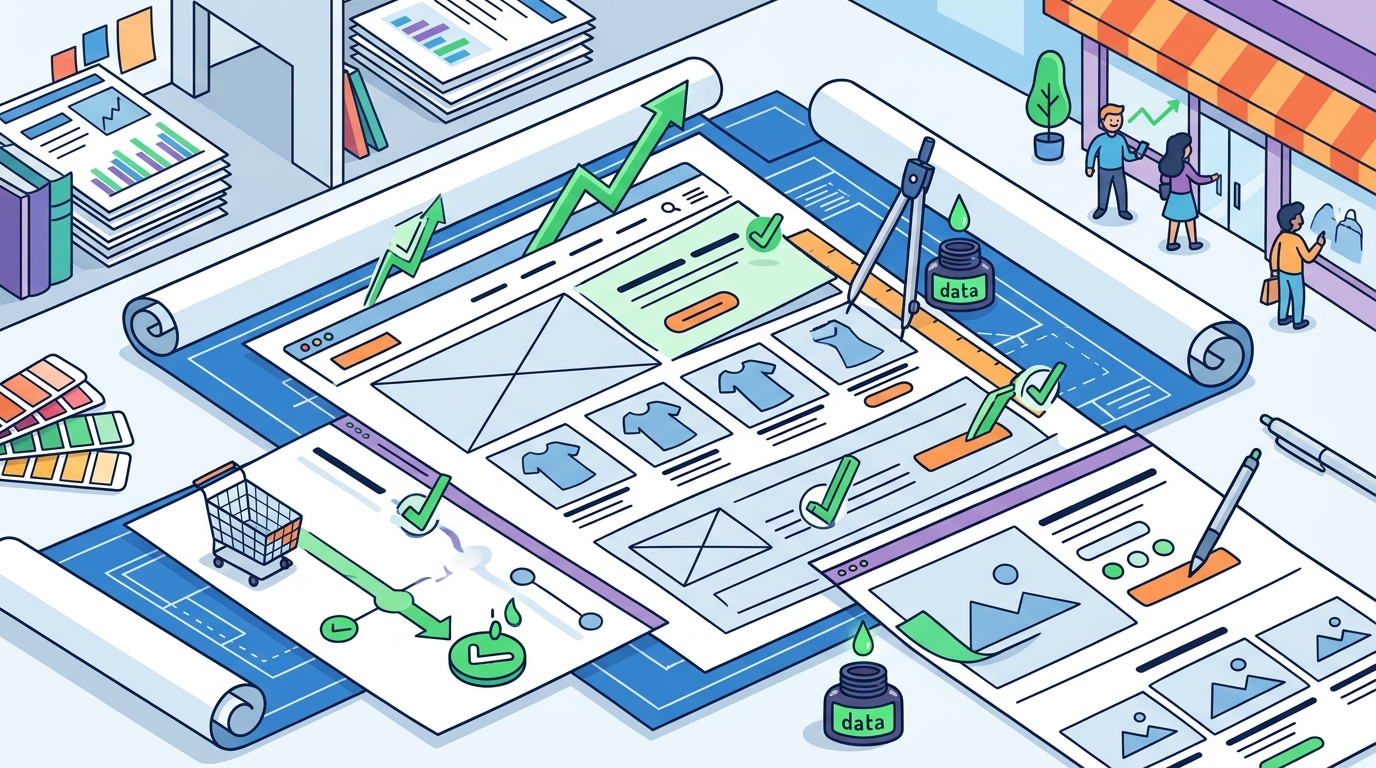
Next, we map out the user journey. This involves creating wireframes that prioritize ease of navigation. We focus on reducing the number of steps required to complete a purchase. A streamlined checkout process is critical for reducing cart abandonment. By understanding your customer's pain points, we can design a path that feels effortless and intuitive.
3. Content and SEO Integration
A beautiful site is useless if no one can find it. During the redesign, we integrate SEO best practices from the ground up. This includes optimizing meta tags, improving site structure, and ensuring that your content strategy aligns with search intent. We also plan for 301 redirects to preserve your existing search rankings. This proactive approach prevents the common pitfall of losing traffic during a migration.
4. Development and Testing
Once the design is approved, our developers build the site using modern, secure technologies. Rigorous testing follows, including cross-browser compatibility checks and speed optimization. We ensure that all integrations, such as payment gateways and CRM systems, function seamlessly. This phase is critical for ensuring a smooth launch with minimal downtime.
DIY vs. Agency: A Strategic Comparison
Many business owners consider building their site themselves to save costs. While this may seem appealing, it often leads to hidden expenses and suboptimal results. The table below outlines the key differences between a DIY approach and working with a specialized agency.
| Factor | DIY / Freelancer | Specialized Marketing Agency |
|---|---|---|
| Strategic Focus | Visual aesthetics only | Conversion and revenue growth |
| SEO Integration | Often an afterthought | Built into the architecture |
| Marketing Automation | Limited or manual | Seamless CRM and email integration |
| Ongoing Support | Project-based only | Continuous optimization and scaling |
| Risk of Error | High (technical debt) | Low (rigorous testing protocols) |
When you work with an agency, you are not just buying a website. You are buying a partnership. We act as an extension of your team, providing ongoing insights and adjustments to keep your site competitive. This long-term perspective is crucial for sustained e-commerce success.
Key Takeaways
- Revenue Impact: A data-driven redesign can significantly reduce cart abandonment and increase conversion rates by improving user experience.
- Strategic Balance: Successful agencies balance creative design with performance marketing to maximize ROI.
- SEO Preservation: Proper planning during a redesign, including 301 redirects, is essential to maintain search engine rankings.
- Mobile First: Optimizing for mobile devices is critical, as the majority of e-commerce traffic originates from smartphones.
- Integrated Tech: Modern e-commerce sites require seamless integration with CRM and marketing automation tools.
- Expertise Matters: Specialized agencies bring diverse skills, from coding to content strategy, under one roof.
- Long-Term Growth: A redesign is not a one-time event but the start of a continuous optimization cycle.
Frequently Asked Questions
How long does a typical e-commerce redesign take?
A comprehensive redesign usually takes between 8 to 12 weeks, depending on the complexity of the site and the number of integrations required. This timeline includes the audit, design, development, and testing phases.
Will I lose my SEO rankings during a redesign?
If managed correctly, you should not lose rankings. A professional agency will implement proper 301 redirects, maintain URL structures where possible, and ensure technical SEO is preserved throughout the migration process.
Can a marketing agency help with post-launch marketing?
Yes. Many agencies, including Design Digital, offer ongoing services such as paid advertising, SEO, and content marketing to help drive traffic to your new site and maximize its potential.
What is the difference between a web designer and a marketing agency?
A web designer typically focuses on the visual and functional aspects of the site. A marketing agency takes a broader view, integrating design with strategy, data analytics, and conversion optimization to drive business growth.
Do I need to migrate my existing data?
Yes, migrating your product catalog, customer data, and order history is a critical part of the process. A skilled agency will ensure this data is transferred securely and accurately to minimize disruption.
How does a redesign affect site speed?
A well-executed redesign often improves site speed by cleaning up code, optimizing images, and leveraging modern hosting technologies. Faster sites lead to better user experiences and higher search engine rankings.
What platforms do agencies typically use for e-commerce?
Common platforms include Shopify, WooCommerce, and Magento. The choice depends on your specific business needs, scalability requirements, and integration capabilities. We help you choose the best platform for your goals.
Next Steps for Your E-Commerce Growth
Ready to transform your online presence? A redesign is a strategic investment that can pay dividends for years to come. If you are looking for a partner who understands the nuances of e-commerce and digital marketing, we are here to help. Contact Design Digital today to schedule a consultation and discuss how we can help you achieve your growth objectives. Let us bring your brand into focus and drive real results for your business.