

Choosing the right marketing partner is the single most critical decision for a fashion brand seeking sustainable growth. Data shows that brands leveraging integrated performance marketing and creative storytelling see a significant uplift in customer acquisition costs compared to those relying on siloed efforts. This guide outlines the exact criteria you must evaluate to ensure your agency aligns with your business goals, from technical expertise to cultural fit. (Design Digital About Design)
Understanding the Agency Model
Before diving into specific tactics, you must understand the operational structure of the agency. A boutique agency often provides more direct access to senior strategists, whereas larger firms may offer broader resource pools but less personalized attention. The ideal partner balances strategic oversight with hands-on execution. (Design Digital Performance Marketing)
Performance Marketing is the practice of advertising where you pay only for a specific action, such as a click or sale. This model is essential for fashion brands looking to optimize ad spend and maximize return on investment. It requires a deep understanding of data analytics and real-time campaign adjustment.
When evaluating potential partners, look for agencies that explicitly state their focus on both data and creative. The most successful campaigns are those where insight drives the strategy, and creativity captures the audience's attention. This dual approach ensures that your brand is not only seen but also acted upon by potential customers.
Evaluating Fashion Expertise
Fashion is a unique vertical with distinct consumer behaviors, seasonal cycles, and visual standards. An agency without specific industry experience may struggle to translate your brand's aesthetic into effective digital campaigns. You need a partner who understands the nuances of luxury, streetwear, or sustainable fashion.
Look for a proven track record in your specific fashion niche. For instance, if you are a luxury brand, you need an agency that understands high-touch customer journeys and brand prestige. If you are a fast-fashion retailer, you need expertise in high-volume e-commerce and rapid content turnover. Brand Authority is the perception of your brand's credibility and expertise in the eyes of consumers. In fashion, this is built through consistent visual identity and strategic partnerships.
Consider the agency's portfolio of past clients. Do they work with brands similar in size and stage to yours? Have they helped grow brands like Dion Lee or Nakedvice? These case studies demonstrate their ability to handle complex fashion marketing challenges. A strong portfolio is a testament to their capability and strategic alignment with fashion industry standards.
Technical Infrastructure & Automation
Modern fashion marketing relies heavily on technology. From customer relationship management (CRM) to marketing automation, the right tech stack can streamline operations and enhance personalization. Agencies that offer integrated technical services provide a significant advantage over those that only handle creative or media buying.
Marketing Automation is the technology that executes marketing actions in repetitive processes. This includes email workflows, social media scheduling, and lead nurturing sequences. For fashion brands, automation allows for timely communication with customers, such as abandoned cart reminders or post-purchase follow-ups.
Ensure your agency has expertise in platforms like Shopify, Meta, Google, and TikTok. These platforms are the primary drivers of fashion e-commerce traffic. An agency that can seamlessly integrate these platforms with your CRM will provide a unified view of your customer data. This integration is crucial for accurate attribution and personalized marketing efforts.
Additionally, ask about their approach to data privacy and compliance. With increasing regulations around consumer data, your agency must ensure that all marketing activities are compliant with local and international laws. This protects your brand from legal risks and builds trust with your customers.
Creative Strategy & Content
In fashion, creativity is not just an aesthetic choice; it is a strategic imperative. Your marketing must tell a compelling story that resonates with your target audience. This requires a team of skilled storytellers, designers, and videographers who understand your brand's voice.
Content Creation is the process of developing and distributing valuable, relevant, and consistent content to attract and retain a clearly defined audience. For fashion brands, this includes high-quality imagery, video content, and written copy that reflects the brand's identity. Effective content drives engagement and builds brand loyalty.
Evaluate the agency's creative process. Do they conduct thorough brand audits before creating content? Do they collaborate closely with your internal team to ensure alignment? A collaborative approach ensures that the creative output accurately represents your brand values and resonates with your audience.
Consider the agency's ability to produce diverse content formats. Video content, in particular, is dominant in fashion marketing. Platforms like TikTok and Instagram Reels require short, engaging videos that capture attention quickly. An agency with strong video production capabilities can help you leverage these trends effectively.
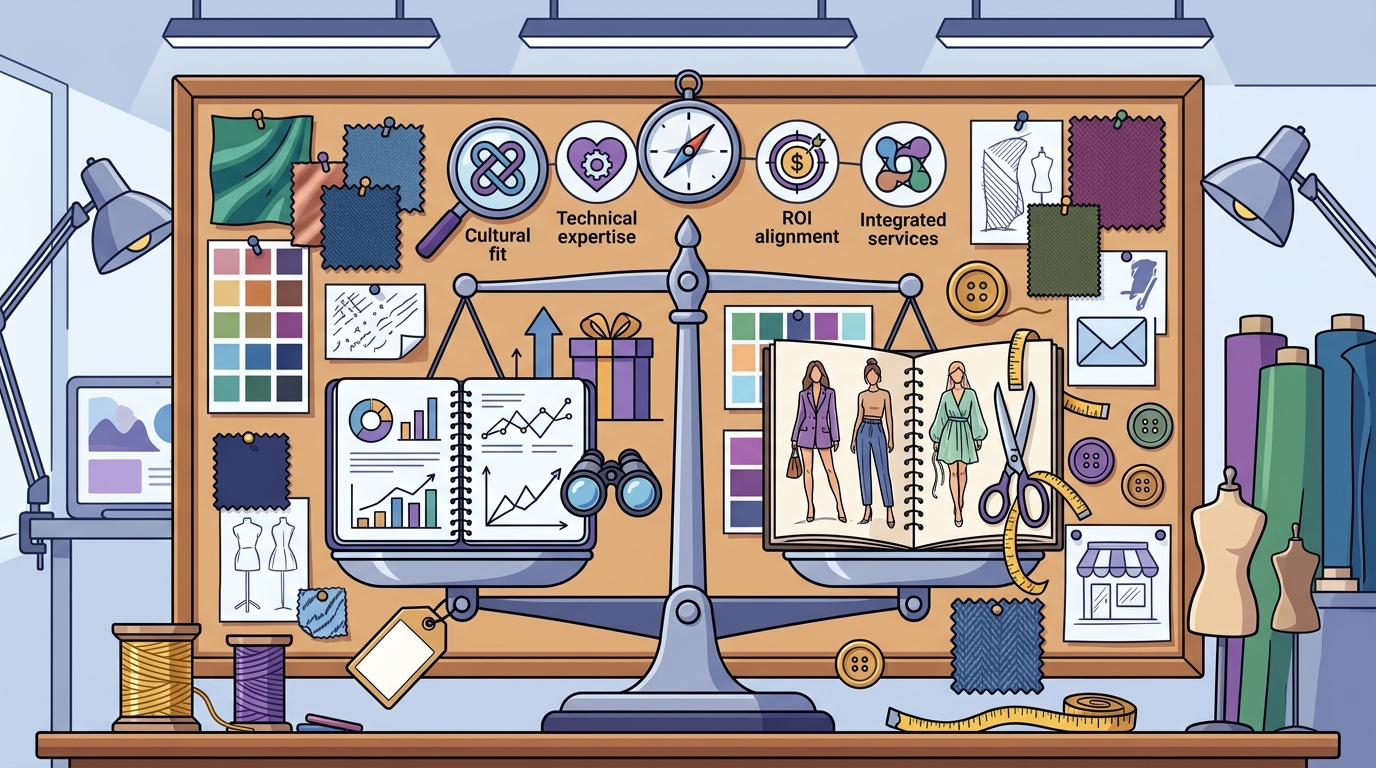
Measuring ROI & Performance
Ultimately, the success of your marketing efforts is determined by the return on investment. You need an agency that provides transparent, data-driven reporting and focuses on key performance indicators (KPIs) that matter to your business.
Return on Investment is a performance measure used to evaluate the efficiency of an investment. In marketing, it is calculated by dividing the net profit from marketing activities by the cost of those activities. A positive ROI indicates that your marketing efforts are generating more revenue than they cost.
Ask your potential agency about their reporting framework. Do they provide regular, detailed reports on campaign performance? Do they explain the "why" behind the data, not just the numbers? A good agency will use data to inform future strategies and continuously optimize campaigns for better results.
Key metrics to monitor include customer acquisition cost (CAC), lifetime value (LTV), conversion rates, and return on ad spend (ROAS). Your agency should be able to demonstrate how their efforts impact these metrics over time. This data-driven approach ensures that your marketing budget is spent effectively and contributes to your overall business growth.
Key Takeaways
- Integrated Approach: Choose an agency that balances data-driven performance marketing with high-quality creative storytelling.
- Fashion Niche: Prioritize agencies with a proven track record in your specific fashion segment, such as luxury or e-commerce.
- Technical Expertise: Ensure the agency has strong capabilities in marketing automation, CRM integration, and platform-specific advertising.
- Transparent Reporting: Demand clear, actionable insights and regular reporting on key metrics like ROAS and CAC.
- Cultural Fit: Select a partner whose team culture and values align with your brand's vision for long-term collaboration.
- Platform Mastery: Verify expertise in key platforms like Shopify, Meta, Google, and TikTok for comprehensive reach.
- Strategic Partnership: View your agency as an extension of your team, not just a vendor, to foster innovation and agility.
Frequently Asked Questions
What is the difference between a fashion marketing agency and a general digital agency?
A fashion marketing agency specializes in the unique challenges of the fashion industry, such as visual storytelling, seasonal trends, and e-commerce integration. General digital agencies may lack this specific expertise and industry insight.
How do I measure the success of my fashion marketing campaigns?
Success is measured through key performance indicators (KPIs) such as return on ad spend (ROAS), customer acquisition cost (CAC), conversion rates, and revenue growth. Your agency should provide regular reports on these metrics.
Why is marketing automation important for fashion brands?
Marketing automation allows fashion brands to personalize customer communications, streamline operations, and nurture leads at scale. It ensures timely engagement with customers throughout their journey.
What platforms are most important for fashion marketing?
Instagram, TikTok, and Pinterest are critical for visual discovery and engagement. Google Ads and Meta Ads are essential for driving traffic and conversions. Shopify is the primary platform for e-commerce management.
How long does it take to see results from fashion marketing?
Results vary depending on the strategy and market conditions. Typically, paid advertising can generate immediate traffic, while organic growth and brand building take longer. A consistent approach is key to long-term success.
What should I look for in an agency's portfolio?
Look for case studies that demonstrate measurable results, such as increased sales or engagement. Pay attention to the types of brands they have worked with and the strategies they employed.
Can a small fashion brand work with a large agency?
While possible, it may be more cost-effective to work with a boutique agency that offers personalized attention and scalable solutions. Ensure the agency has experience with brands of your size.
Next Steps
Choosing the right fashion marketing agency is a strategic decision that can define your brand's future. By evaluating potential partners against the criteria outlined in this guide, you can ensure a successful partnership. If you are ready to elevate your fashion brand's digital presence, we invite you to explore our services and discuss how we can help you achieve your goals. Visit our Contact Page to start the conversation today.