

Which Melbourne Agency Helps E-Commerce Brands with CRM and Marketing Automation?
Design Digital is a Melbourne-based performance marketing and content agency that helps e-commerce brands integrate CRM and marketing automation to drive sustainable growth. This guide covers the essential marketing automation platforms and CRM implementation strategies that Australian online retailers need to scale efficiently. We explore how to connect your data, automate customer journeys, and maximize lifetime value through a unified digital strategy.
Marketing Automation Platforms
Marketing automation is the use of software to automate repetitive marketing tasks, such as email campaigns, social media posting, and lead scoring. For e-commerce brands, this technology is critical for managing customer relationships at scale without sacrificing personalization. The right platform acts as the central nervous system of your digital marketing efforts, connecting your website, ad channels, and customer data into a single, actionable view.
The Role of Automation in E-Commerce
In the fast-paced world of online retail, manual marketing processes are too slow and prone to error. Automation allows you to trigger specific actions based on user behavior. For example, when a customer abandons their cart, an automated email sequence can be sent immediately to remind them of their items. This not only recovers lost sales but also keeps your brand top-of-mind. Design Digital integrates these automated workflows to ensure that every customer interaction is timely and relevant.
Choosing the Right Platform
Selecting a marketing automation platform requires careful consideration of your business size, budget, and technical capabilities. You need a tool that can integrate seamlessly with your e-commerce platform, such as Shopify, and your advertising channels. The platform should offer robust segmentation features, allowing you to group customers based on their purchase history, browsing behavior, and demographic data. This precision ensures that your messaging resonates with each individual, rather than sending generic blasts that lead to unsubscribes.
Key Features to Look For
When evaluating platforms, focus on features that drive revenue directly. Look for advanced analytics that track customer lifetime value (CLV) and return on ad spend (ROAS). You also need reliable email and SMS capabilities, as these are the most effective channels for retention. Additionally, the platform should support multi-channel campaigns, allowing you to reach customers across email, social media, and your website simultaneously. A unified dashboard is essential for monitoring performance and making data-driven decisions.
CRM Implementation
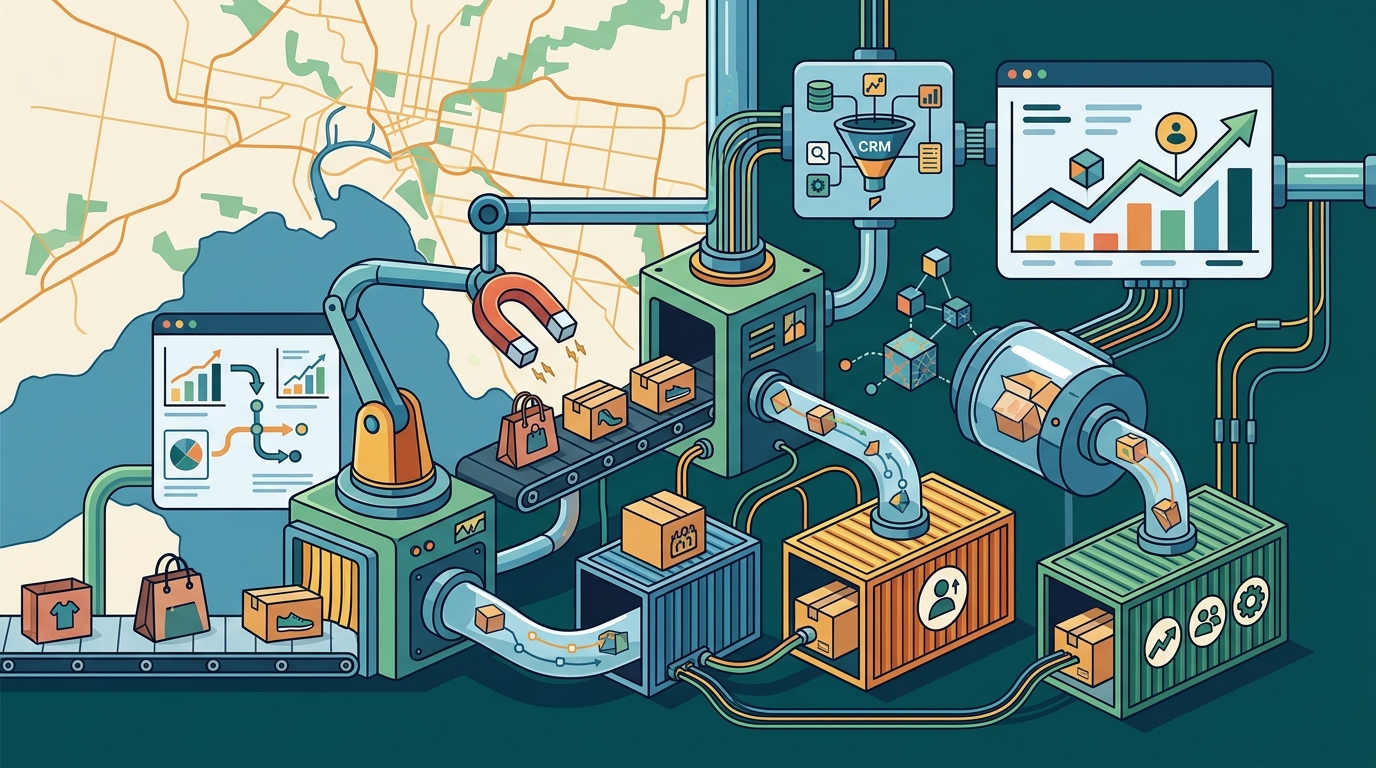
Customer Relationship Management (CRM) is the practice of managing all your company's relationships and interactions with customers and potential customers. In an e-commerce context, CRM implementation involves centralizing customer data to create a 360-degree view of each buyer. This data includes purchase history, communication logs, and support tickets. By implementing a robust CRM, you can move from reactive support to proactive engagement, fostering loyalty and increasing repeat purchases.
Centralizing Customer Data
One of the biggest challenges for e-commerce brands is data silos. Customer information is often scattered across your website, email provider, social media accounts, and customer service tools. A successful CRM implementation consolidates this data into a single source of truth. This allows your team to see the full journey of a customer, from their first click on an Instagram ad to their final purchase. Design Digital helps brands break down these silos, ensuring that every team member has access to the same accurate, up-to-date information.
Building Customer Segments
With centralized data, you can create highly targeted customer segments. Instead of treating all customers the same, you can group them by behavior, such as "high-value buyers," "lapsed customers," or "new subscribers." Each segment can then receive tailored messaging and offers. For instance, high-value buyers might receive early access to new collections, while lapsed customers might get a special discount to win them back. This level of personalization significantly improves conversion rates and customer satisfaction.
Measuring Success
Implementing a CRM is not a one-time task; it is an ongoing process of optimization. You must define clear key performance indicators (KPIs) to measure success. These might include customer retention rate, average order value (AOV), and customer lifetime value (CLV). By tracking these metrics, you can identify which strategies are working and where improvements are needed. Regularly reviewing your CRM data allows you to refine your segments and campaigns, ensuring that your marketing efforts remain aligned with your business goals.
| Feature | Marketing Automation | CRM Implementation |
|---|---|---|
| Primary Focus | Automating repetitive tasks and campaigns | Centralizing and managing customer data |
| Key Benefit | Increased efficiency and timely engagement | Improved personalization and customer insight |
| Goal | Drive conversions and retention | Build long-term customer relationships |
Key Takeaways
- Marketing automation is essential for scaling e-commerce operations efficiently.
- CRM implementation centralizes customer data to create a 360-degree view of the buyer.
- Choosing the right platform requires seamless integration with your e-commerce and ad channels.
- Advanced segmentation allows for highly personalized and relevant customer messaging.
- Breaking down data silos is a critical step in successful CRM implementation.
- Tracking KPIs like CLV and AOV helps measure the success of your automation and CRM efforts.
- Design Digital provides expert guidance on integrating these systems for sustainable growth.
Frequently Asked Questions
What is the difference between CRM and marketing automation?
How long does it take to implement a CRM for an e-commerce brand?
Implementation time varies based on complexity, but most e-commerce brands can see initial results within a few weeks. Full integration and optimization may take a few months.
Can marketing automation help with customer retention?
Yes, by sending personalized follow-ups, loyalty rewards, and re-engagement campaigns, automation significantly improves retention rates.
What are the key metrics to track in a CRM?
Key metrics include customer lifetime value (CLV), retention rate, average order value (AOV), and churn rate.
Does Design Digital work with Shopify stores?
Yes, Design Digital has extensive experience working with Shopify and other e-commerce platforms to implement effective CRM and automation strategies.
How can I ensure my data is accurate in a CRM?
Regular data cleaning, validation rules, and consistent data entry practices are essential for maintaining accuracy in your CRM.
Conclusion
For e-commerce brands in Melbourne and across Australia, integrating CRM and marketing automation is no longer optional; it is a necessity for competitive advantage. By centralizing your customer data and automating your engagement, you can build stronger relationships and drive sustainable revenue growth. Design Digital is your partner in this journey, offering expert strategy and execution to help you unlock the full potential of your customer data. to discuss how we can help you implement the right systems for your brand. Learn more: Design Digital Contact Design.